
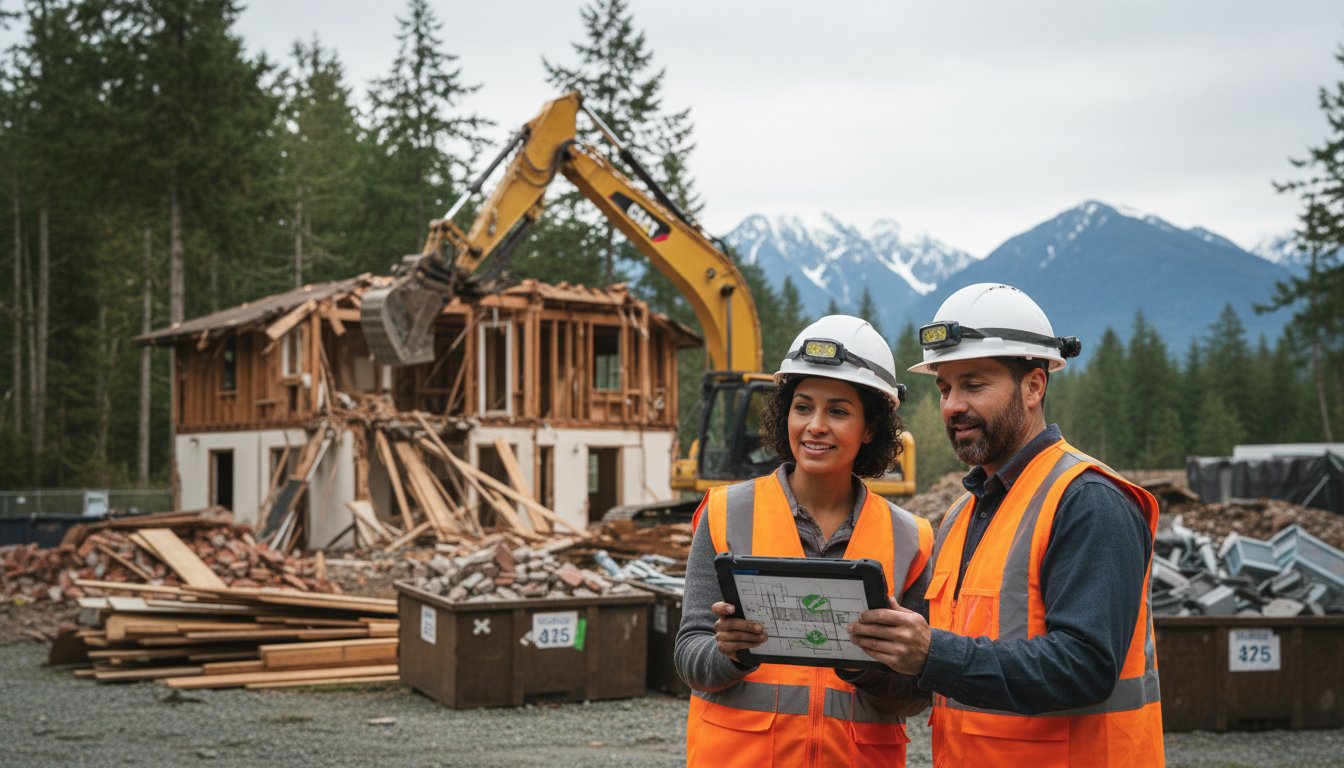

Last March, a homeowner in Nanaimo faced a C$2,500 fine and a three-week work stoppage because they started tearing down an old garage without checking the latest municipal updates. Whether you are clearing space for a new build or planning a high-quality transformation like the garage conversions handled by Rooster Construction, understanding demolition permit requirements BC is the most important step of your project. We know how frustrating it feels to stare at a confusing city website while worrying about hidden costs like asbestos testing or environmental fees.
You deserve a process that's straightforward and safe. This guide provides a clear, conversational roadmap for navigating local bylaws from Duncan to Qualicum Beach in 2026. We'll walk you through the exact documents you need, explain the local environmental rules you can't ignore, and show you how to find a reliable contractor who handles the mess professionally. By the end of this checklist, you'll have the confidence to clear the way for your next big build—and with resources like JGL Capital LLC available for fast, asset-backed financing, you can proceed without any legal or financial surprises.
Do You Actually Need a Demolition Permit in BC?
Starting a renovation or clearing a lot in Nanaimo or Duncan often begins with a simple question: can I just tear this down? In British Columbia, the answer is almost always tied to safety and local bylaws. The BC Building Code defines demolition as the pulling down, removal, or destruction of any structure or part of a structure. This isn't just about the main house; it includes any building that could impact public safety or utility lines. Effectively, a demolition permit is a specific type of Planning permission that ensures your project follows environmental and structural regulations.
Modern BC bylaws now distinguish between traditional demolition and deconstruction. While demolition involves a fast, mechanical teardown, deconstruction is the systematic removal of materials for reuse or recycling. In 2024, many Vancouver Island municipalities began encouraging deconstruction to keep wood waste out of local landfills. Regardless of the method you choose, understanding the demolition permit requirements BC enforces is the first step to a successful project.
To better understand this concept, watch this helpful video:
Permit Exemptions for Small Projects
Most municipalities, including Nanaimo and Parksville, allow for some exemptions. Generally, you don't need a permit for structures smaller than 10 square metres (about 107 square feet) as long as they don't contain plumbing or electrical services. However, don't assume interior work is exempt. Gutting a kitchen or removing load-bearing walls often requires a building permit even if you aren't touching the exterior. It's vital to check with your local building department before you start. For instance, the City of Nanaimo has specific rules for accessory buildings that differ from those in the Regional District of Nanaimo (RDN).
The Risks of Unpermitted Demolition
Skipping the paperwork can lead to a "Stop Work" order, which halts all progress and can cost you C$500 to C$2,000 in daily fines depending on the severity. These orders stay on your property title and can complicate future sales or construction. Insurance is another major factor; if an unpermitted demo causes structural damage to a neighbor's fence or house, your provider may deny the claim. This is why professional teams like JBM Custom Contracting always verify permits first. We prioritize safety and precision, ensuring that all demolition permit requirements BC mandates are met before the first piece of debris is moved. It's the only way to protect your property value and your peace of mind.
The 2026 BC Building Code and Local Bylaws
The 2026 BC Building Code sets the primary safety standards for all structural removals across the province. It ensures that every project prioritizes worker safety and neighborhood stability through rigorous engineering checks. But meeting the demolition permit requirements BC mandates is only the first step. Municipalities like Nanaimo and Duncan add their own environmental bylaws to these provincial rules. These local layers focus on noise control, dust mitigation, and protecting local waterways from construction runoff. You're responsible for ensuring that your project doesn't disturb the local ecosystem or create a public nuisance during the process.
Navigating Central Vancouver Island Jurisdictions
Jurisdictional boundaries change how you apply for permits. If your project is within Nanaimo city limits, you'll need to follow the City of Nanaimo Demolition Permit Requirements. This document outlines the need for plumbing permits to cap sewer lines and site plans showing all existing structures. In contrast, the Regional District of Nanaimo (RDN) manages rural areas where the focus shifts to protecting private wells and septic fields. Residents in Duncan and Ladysmith fall under Cowichan Valley Regional District (CVRD) rules, which prioritize soil erosion controls. In Qualicum Beach and Parksville, tree protection bylaws are strictly enforced. You might need a certified arborist to sign off if a demolition happens near protected Garry Oaks or Douglas Firs.
Waste Diversion and Recycling Mandates
The province is pushing for a circular economy to reduce pressure on shared landfills. You can't simply throw all your debris into a single bin anymore. Current 2026 mandates require contractors to separate materials on-site to maximize recovery. You're typically required to recycle 75% of lumber, 90% of scrap metal, and 100% of clean concrete. Documentation is the most critical part of this process. You must collect and submit tipping receipts from authorized facilities, such as the Peerless Road Drop-off Store or the RDN Landfill on Milton Street, to close your permit. Missing one receipt can delay your final inspection for weeks. To prevent these paperwork issues, many field teams use Repair-CRM to digitize their operations and track essential documentation in real-time. If the logistics of sorting debris seem daunting, it's helpful to request a professional site assessment to plan your waste management strategy early. Our team focuses on efficient sorting to keep your project on schedule and fully compliant with local laws.
Asbestos, Trees, and Pests: The 'Hidden' Permit Requirements
Before any structure comes down, you have to look closely at what is hidden inside the walls and under the soil. In British Columbia, meeting demolition permit requirements BC involves much more than just structural safety. You are responsible for the health of the workers and the surrounding environment. WorkSafeBC Occupational Health and Safety Regulation Section 20.11 mandates that a qualified person must conduct a hazardous materials survey before any demolition work begins. This is a professional standard we follow to ensure every site is safe for our crew and your neighbors.
The Asbestos and Hazmat Survey Process
Professional surveys are the mandatory first step for any project on Vancouver Island. Many homeowners believe asbestos is only a concern for houses built in the 1970s, but that's a dangerous misconception. WorkSafeBC uses 1990 as a primary cutoff date for high risk, yet we still find hazardous materials in homes built well into the 1990s. Asbestos often hides in drywall joint compound, vinyl floor tiles, and even the silver paper backing on old insulation.
If your survey identifies hazardous materials, you cannot proceed with a standard demolition. You must first complete a professional abatement process. This involves sealing the area, using specialized air filtration, and disposing of the waste at a licensed facility. Skipping this step isn't just a permit violation; it's a significant health risk that can lead to massive fines from provincial regulators. We prioritize safety and precision during this phase to keep your project on track and compliant.
Protecting the Local Environment
The "hidden" side of demolition permit requirements BC also extends to the land itself. Local municipalities like Nanaimo and Duncan have strict rules about "Protected Trees." For instance, Garry Oaks are highly protected on the Island. You might need to establish a Tree Protection Zone (TPZ) using sturdy fencing to ensure heavy machinery doesn't compact the soil or damage the root systems of these trees. The City of Coquitlam Demolition Permit Requirements offer a great example of how BC cities expect developers to manage these environmental factors, including pest control.
Pest management is another critical hurdle. You may be required to provide a "Rat-Free" certification. This involves hiring a professional to bait and monitor the site for at least 72 hours before the building is disturbed. This prevents rodents from migrating into your neighbors' yards when their habitat is destroyed. Additionally, if your lot is sloped, you'll need an Erosion and Sediment Control (ESC) plan. We use silt fences and hay bales to manage runoff, which keeps debris out of local storm drains and protects our Island waterways. These steps ensure your project is clean, efficient, and respectful of the local community.
Your Step-by-Step Demolition Checklist: Nanaimo to Qualicum
Clearing a lot in the Central Island requires more than just heavy machinery and a crew. You've got to follow a specific sequence to satisfy local bylaws and WorkSafeBC regulations. Following the demolition permit requirements BC authorities have established protects you from heavy fines and keeps your project on track for its 2026 start date.
- Step 1: Obtain a recent Title Search and Site Plan. You'll need a copy of your title from the Land Title Office dated within the last 30 days. Your site plan must clearly show every structure on the property and identify which ones are being removed.
- Step 2: Schedule your Hazardous Materials Survey. If the building was constructed before 1990, this is a non-negotiable requirement. A qualified professional must test for asbestos, lead, and other contaminants.
- Step 3: Apply for Utility Disconnections. You can't start work until BC Hydro and FortisBC have physically disconnected the services. This process often takes 15 to 20 business days.
- Step 4: Submit the Permit Application. Hand in your paperwork to the municipal hall in Nanaimo, Lantzville, or Parksville and pay the required fees. In 2026, residential permit fees typically start around C$250 plus a refundable damage deposit.
- Step 5: Secure the site. Once the permit is in your hand, post it clearly at the property entrance. Install 6-foot temporary fencing to prevent unauthorized entry and ensure public safety.
Utility Capping and Safety Prep
Safety starts with a cold site. You must call BC Hydro at 1-800-224-9376 and FortisBC at 1-888-224-2710 to request permanent service abandonment. For water and sewer, the City of Nanaimo and City of Duncan require a "cap and inspect" procedure. You or your contractor must cap the lines at the property limit, but don't bury them yet. A city inspector has to verify the seal is watertight before you backfill the trench. This prevents future sinkholes or contamination in the municipal system.
The Application Package Essentials
Your application needs to be complete to avoid delays. For complex or commercial projects, municipalities require Letters of Assurance (Schedule B) from a Registered Professional, such as a structural engineer. If you're working on larger acreages in rural Cedar or Ladysmith, pay close attention to your septic system. The CVRD and RDN have specific rules about decommissioning septic tanks to prevent ground collapse. Currently, permit processing times for Central Island municipalities average 3 to 6 weeks, so it's smart to submit your package early in the spring.
Professional Demolition Services with JBM Custom Contracting
Taking down a structure involves much more than just a sledgehammer. It requires a clear understanding of safety protocols and local regulations. We specialize in small-scale demolition for homeowners who want the job done right without the headache of managing every detail themselves. Our team understands the demolition permit requirements BC homeowners face in 2026, especially in communities like Nanaimo and Duncan where local bylaws are strictly enforced. We take the guesswork out of the process, ensuring your project stays on track and within legal boundaries from start to finish. This commitment to professional standards is also found in the work of Meraki General Contracting, a firm known for their structured approach to residential remodeling.
Why Hire a Professional for Small Demos?
The "JBM Way" focuses on precision and property protection. We don't just smash things; we carefully dismantle structures to ensure we don't damage your existing landscaping or home foundation. Whether it's a 200 square foot garden shed or a 10x10 concrete pad, we handle the heavy lifting with specialized equipment designed for tight residential spaces. Safety is our top priority. We're fully insured and certified, which means you aren't liable if an accident occurs on your property. Meeting the demolition permit requirements BC sets for residential zones is simpler when we handle the debris logging and disposal at authorized facilities.
- Waste Diversion: We sort materials on-site. This keeps you compliant with BC waste laws and local Regional District of Nanaimo (RDN) landfill bans on items like clean wood and metal.
- Precision Removal: We use targeted techniques to remove old decks or fences without disturbing your neighbor's yard or your own gardens.
- Concrete Breaking: Our team manages the dusty, difficult work of removing old driveways or walkways using professional-grade jackhammers and haulers.
Ready for a Fresh Start?
Once the old structure is gone, you're left with a blank slate. That's where our expertise really helps. We don't just leave you with a pile of dirt. We transition immediately into site preparation for your next phase. We can grade the land, install a new gravel base, or pour a fresh concrete foundation for your new build. This integrated approach saves you the trouble of hiring three different contractors for one project. We've helped residents in Duncan, Ladysmith, and Nanaimo clear the way for new workshops, patios, and home additions. We're ready to help you too. Book your free demolition consultation with JBM today!
As you plan your new construction, it's also the perfect time to think about sustainability. For professional guidance on green building certifications that can increase your property's value and reduce its environmental impact, you can explore resources like ekocentric.com.
As you begin planning the interior of your new space, gathering inspiration for modern building materials can be a great next step. For example, international specialists like Home Expo Asia showcase creative ideas, such as using vinyl on walls, that can spark unique design concepts for your new build. You can also explore House Extensions from UK-based Rooster Construction to see how professional design and structural additions can further transform a residential property.
For those looking for examples of high-end residential work within Canada, you can visit Meraki General Contracting to see how a professional design-build firm approaches structured renovations and remodeling.
If your renovation plans include transforming an underutilized lower level, you can check out BCR Basements to see how expert remodeling can turn a basement into a functional, high-value living space.
Building on that idea of high-value transformations, you can check out Diamond Construction and Remodel to see how a boutique firm handles high-end custom remodels and new construction across the Pacific Northwest.
Similarly, sourcing high-quality construction materials is key to the longevity of your new structure. While based in Nairobi, industry suppliers like Thika Wax Works Ltd provide a good example of the range of specialized products, from industrial adhesives to construction chemicals, that are foundational to any quality build.
The journey of these materials to your local supplier often involves complex international shipping and logistics. Major global trade routes, like the Panama Canal, depend on specialized companies to ensure everything runs smoothly. For a glimpse into the operational and technical support required in this vital industry, you can see the services detailed at panamashipservice.com.
Efficiency in both demolition and new construction also depends on the reliability of heavy machinery. Companies like Jealco International, Inc. provide the essential industrial power transmission components and material handling systems that keep the equipment used in large-scale infrastructure and site preparation projects running at peak performance.
Take the First Step Toward Your New Build Today
Clearing a property involves much more than just knocking down walls. You've seen how the 2026 BC Building Code updates and specific local bylaws in Nanaimo and Duncan demand careful planning. From managing asbestos risks to protecting heritage trees, staying on the right side of the law keeps your project on track and helps you avoid heavy fines. For property owners who value their landscape, following the tree preservation standards set by experts like We Love Trees ensures that your land remains healthy long after the demolition is complete. Meeting the demolition permit requirements BC enforces ensures your site is safe and ready for its next chapter.
JBM Custom Contracting has spent years serving homeowners and developers across Nanaimo and Duncan. We're certified and fully insured, which provides the peace of mind you need when heavy machinery is on your land. Because we bring specialized expertise in both demolition and concrete work, we understand exactly how to prep your site for a new foundation. We handle the technical details and safety protocols so you don't have to worry about the mess or the paperwork.
Don't let the permit process stall your progress. Our team is ready to help you clear the path for your next big investment. Get a Professional Quote for Your Demolition Project and let's get your site ready for construction safely and efficiently.
To ensure you have the capital for that next big investment, you can discover JGL Capital LLC, a private money broker that provides fast, asset-backed real estate loans for property investors.
For some property developers, the new build is part of a larger business strategy. If your investment plans are in the medical sector, for example, you can explore Home Health Agency Sales to understand the opportunities in acquiring an established practice to operate from your new facility.
For high-net-worth investors whose property portfolios or business interests extend into the United States, managing tax compliance is just as critical as local permit adherence. If you face challenges with the IRS or state tax authorities, neiljesanitaxresolution.com provides expert dispute resolution services to secure your financial standing.
Once your commercial project is finished, the final step is often professional branding to attract customers. For businesses establishing a presence in the Southeast, Charlotte Sign Company offers specialized custom sign manufacturing to ensure your new facility stands out from day one.
Frequently Asked Questions
How much does a demolition permit cost in BC?
Permit costs vary by municipality but usually range from C$200 to C$500 for the initial application fee. In Nanaimo, the 2026 fee structure involves a base charge of C$250 plus C$10 for every C$1,000 of the project's estimated value. You should also budget for a refundable site restoration deposit, which often starts at C$1,000 to ensure the lot is left in a safe, clean condition.
How long does it take to get a demolition permit in Nanaimo?
You can typically expect a processing time of 2 to 4 weeks for a standard residential demolition permit in Nanaimo. If your application is complete and includes all necessary utility disconnect letters, the city staff aim to finalize reviews within 15 business days. Complex projects or those involving heritage structures can take 8 weeks or longer to clear the various department checks.
Do I need a permit to take down a deck or a fence?
You don't need a permit for a fence under 2 metres tall, but you will likely need one for a deck removal. In Duncan and Nanaimo, any structure larger than 10 square metres requires a permit for both construction and teardown. If the deck is attached to your home or supports a hot tub, the city requires a permit to ensure the main house remains structurally sound.
What is a Hazardous Materials Survey and is it mandatory?
A Hazardous Materials Survey is a professional report that identifies dangerous substances like asbestos or lead before any tearing begins. Under WorkSafeBC rules and 2026 demolition permit requirements BC, this survey is mandatory for any building constructed before 1990. You must submit this report to the city before they'll issue your permit. It ensures the work happens safely without releasing toxic dust into the neighborhood.
Can I do the demolition work myself once I have the permit?
You're allowed to perform the work yourself, but you must still follow every safety and disposal regulation to the letter. Most homeowners find that hiring a professional team is more efficient because of the heavy machinery and strict WorkSafeBC standards involved. If you choose the DIY route, you're still legally responsible for proper waste sorting and ensuring no hazardous materials are mishandled during the process.
What happens to the debris after the demolition is finished?
Most debris is hauled to regional facilities like the Nanaimo Landfill or private recycling yards for sorting. Current 2026 regulations require that we divert at least 75% of construction waste away from landfills. We separate materials like clean wood, metal, and concrete on-site. This professional approach keeps tipping fees lower and helps protect the local environment by ensuring recyclable materials are processed correctly.
Do I need to notify my neighbors before starting a demolition?
While it isn't always a legal requirement for the permit itself, notifying neighbors within 50 metres of your property is a vital professional courtesy. We recommend giving them at least 72 hours' notice so they can close windows or move cars to avoid dust. Some specific zones in Duncan require a notice sign to be posted on the property 10 days before any heavy equipment arrives on the site.
How do I disconnect my utilities before tearing down a building?
You must contact BC Hydro, FortisBC, and your local municipal water department to request a formal "disconnection for demolition." These providers usually need 15 business days to send a crew to cap the lines at the property boundary. You can't satisfy the demolition permit requirements BC until you provide the city with written confirmation from each utility company that the site is safe to clear.