
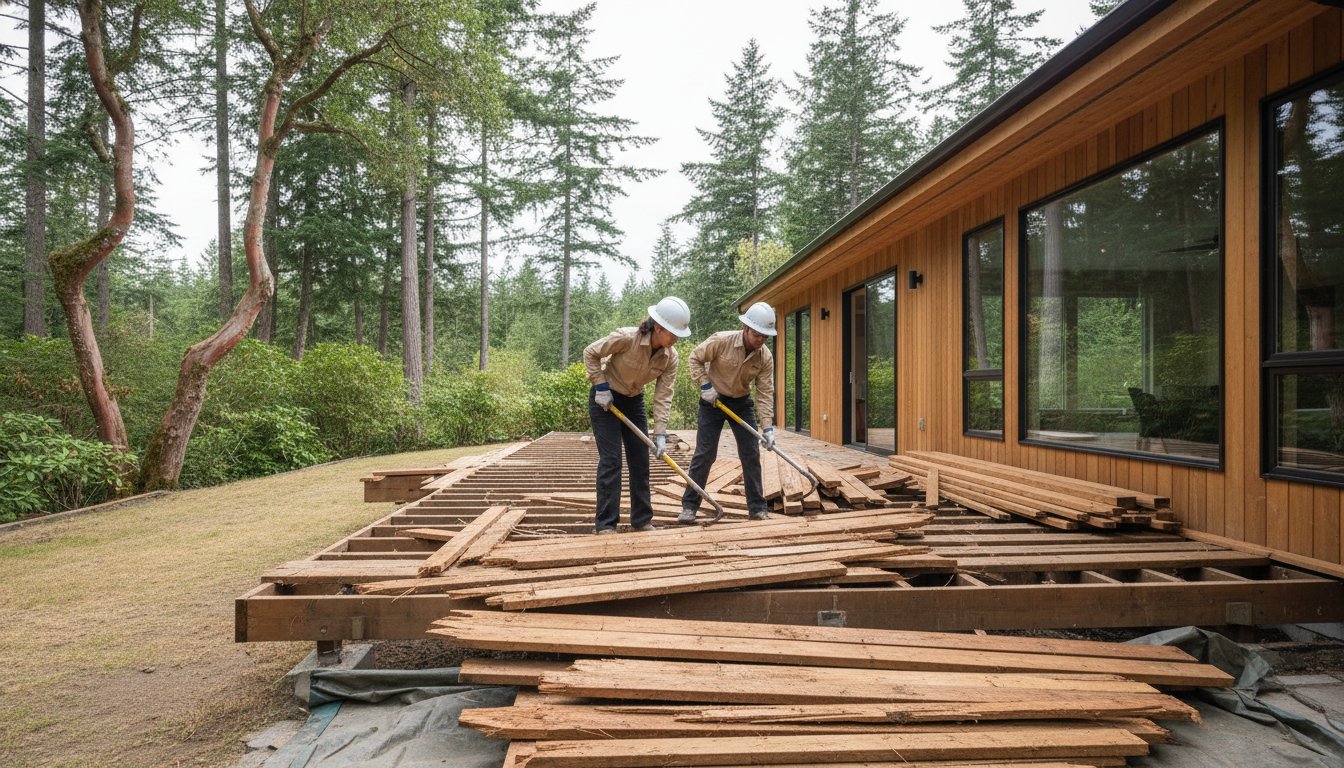

Did you know that a standard 200 square foot deck can generate up to two tons of heavy lumber debris? It's easy to see why many homeowners feel overwhelmed by the physical strain and the logistics of hauling that much weight to the local landfill. You want that old, rotting structure gone so you can start fresh, but the uncertainty around high disposal fees and hidden structural issues can make the project feel like a headache before it even starts. Understanding the total cost to remove a wooden deck is the first step toward reclaiming your backyard safely and efficiently.
We agree that your property deserves a clean slate without the stress of multiple dump trips or permit confusion. This guide will help you discover the real-world factors that influence demolition pricing and how to plan a project that protects your home. We'll break down the 2026 tipping fees for regions like Nanaimo and the Cowichan Valley, explain where you actually need a permit, and provide a clear roadmap for a professional grade removal that leaves your yard ready for its next big project.
Understanding the Primary Factors in Deck Removal Costs
Removing an old deck involves much more than a few hours of physical labor. It's a professional, multi-stage process that requires a careful assessment, a safe demolition plan, and efficient hauling. The total cost to remove a wooden deck is rarely a flat fee. Instead, it's a calculation based on how your specific structure was built and the materials used in its construction.
Square footage is the most obvious starting point. A larger deck requires more labor hours and results in more weight for disposal. For example, a standard 200 square foot deck can easily produce two tons of lumber waste. Material type also plays a role in the complexity of the job. Cedar is generally lighter and easier to cut, while pressure-treated wood is dense, heavy, and contains chemicals that require specific disposal handling. Some property owners choose deconstruction methods to try and save salvageable boards, but this careful dismantling takes significantly more time than a standard tear-out.
Accessibility is the final major logistical factor. If a crew can park a junk removal truck or a disposal bin right next to the deck, the job stays fast. If the backyard is only accessible through a narrow gate or down a steep flight of stairs, every piece of debris has to be carried by hand. This extra handling time increases the total labor required for the project.
Structural Complexity and Attachment
A free-standing deck in the middle of a yard is a straightforward project. However, most decks are attached directly to the house using a ledger board. Removing these requires a high level of precision. If the ledger board is pulled away carelessly, it can damage your home's siding or even the underlying house frame. Multi-level decks also increase the difficulty. These projects require specialized safety gear and a strict top-down demolition sequence to prevent heavy beams from falling on workers or your landscaping.
The Condition of the Wood
It's a common mistake to think that a rotting deck is easier to remove. In many cases, rot makes the job more dangerous. Soft, decaying wood is unpredictable and can collapse under the weight of a person or equipment. This instability requires crews to use extra bracing or longer-reach tools to stay safe. Additionally, old decks often have rusted bolts and stripped screws. When hardware is fused together by years of moisture, it won't pull out easily. We have to use specialized cutting saws to break the structure into manageable pieces, which adds time to the demolition phase.
The 2026 Cost Breakdown: Labor, Disposal, and Equipment
Planning your budget for a backyard renovation requires a clear look at where your money actually goes. Typically, the cost to remove a wooden deck is split between two main categories: labor and disposal. Labor generally accounts for about 60 percent of the total, while disposal fees, equipment, and site protection make up the remaining 40 percent. In 2026, shifting fuel prices and updated regional landfill rates have become the most significant variables in these calculations.
Beyond the obvious work of tearing down boards, professionals invest in site protection to keep your property pristine. This includes laying down plywood sheets to protect your lawn from heavy foot traffic and using heavy duty tarps to catch small debris and rusted fasteners. Specialized tools also factor into the overhead. A standard demolition requires high quality reciprocating saws, dozens of carbide tipped blades for cutting through old nails, and heavy sledgehammers. These tools undergo significant wear and tear when facing decades old pressure treated lumber.
Disposal and Tipping Fees
Landfills and transfer stations charge by weight, and because deck lumber is dense, it gets heavy quickly. Tipping fees are the specific costs paid to these facilities per ton of waste. In 2026, these rates vary significantly by region. For example, in the Regional District of Nanaimo (RDN), wood waste is charged at $275 per tonne as of April 1. Meanwhile, at the Bings Creek facility in the Cowichan Valley, the rate is $242 per tonne. To keep costs manageable, we often separate materials like metal railings and concrete footings from the wood. Following EPA deconstruction guidance can help identify which materials are better suited for recycling versus the landfill, which can sometimes lower the overall disposal bill.
Labor and Time Estimates
A standard 10x12 deck typically requires a two person crew working a full day to complete the teardown and haul away. It's vital to remember that professional demolition services provide much more than simple junk removal. While a junk hauler might just pick up a pile of wood, a demolition crew handles the technical dismantling of the structure. This includes safely disconnecting the deck from your home's ledger board and managing heavy beams. Professional labor costs also cover essential liability insurance. This ensures that if an accident occurs during the demolition, the homeowner isn't left responsible for the damages or medical costs. This peace of mind is a fundamental part of the service value.
DIY vs. Professional Deck Demolition: Is the Savings Worth the Risk?
Deciding whether to tackle the job yourself often comes down to the perceived savings. While the labor portion of the cost to remove a wooden deck can be halved by doing it yourself, the trade off is your time and physical safety. A professional crew can often dismantle and clear a standard deck in just a few hours. For a homeowner, this same task usually consumes an entire weekend or more. Between the heavy lifting and the logistics of hauling debris, the savings often evaporate when you consider the value of your own time.
There is also the physical toll to consider. Deck demolition involves prying up stubborn boards and managing heavy beams. These tasks carry real risks like back strain and nail punctures. Beyond personal injury, DIYers frequently face the liability of property damage. If the deck is attached to the house, one wrong move with a pry bar can rip the siding or damage the underlying frame. These repairs often cost far more than the money saved by skipping a professional crew.
Many people fall into the "Truck Rental Trap." You might think renting a pickup is cheap, but once you add in insurance, mileage fees, and 2026 fuel prices, the bill grows quickly. Since a standard deck generates significant weight, you'll likely need multiple trips to the dump. This means paying weight based tipping fees every single time you pull onto the scales. Professionals avoid this by using high capacity trailers that handle the entire load in a single trip.
The Professional Advantage
Hiring professional demolition services offers a "one and done" solution that protects your property. A pro team handles everything from the first board to the final sweep of the yard. Experts also know how to spot and manage unexpected issues, such as carpenter ant nests or termite damage hidden within the frame. Following OSHA safety regulations ensures the structure remains stable until the final piece is safely removed.
When DIY Makes Sense
A DIY approach is most practical for small, ground level platforms that aren't bolted to your house. If the structure is unattached and sits on simple concrete blocks, the risks are much lower. Before you start, ensure you have the right safety gear:
- Heavy duty work gloves and steel toe boots.
- Impact resistant eye protection and a dust mask.
- A pry bar and a high quality reciprocating saw.
If your deck is more than two feet off the ground, has multiple levels, or is attached to your home's ledger board, the job is likely too big for a solo weekend project. In these cases, the expertise of a professional team is the most efficient way to get your backyard ready for its next upgrade.
Local Considerations for Duncan, Nanaimo, and Central Vancouver Island
Living on Central Vancouver Island means navigating a unique set of regional rules that directly impact the cost to remove a wooden deck. You can't simply treat a demolition in Duncan the same way you would in Nanaimo. Each municipality has its own set of permit requirements and disposal fees that can change your project's timeline and budget. Our local weather also plays a significant role in scheduling. Heavy West Coast rain can turn a backyard into a muddy mess quickly. We often plan removals during dry windows to ensure that heavy foot traffic and debris hauling don't ruin your landscaping or lawn.
Hiring a local demolition company that understands these nuances is the best way to avoid unexpected fines or delays. A team familiar with Vancouver Island bylaws will know exactly which paperwork to file and which landfills offer the best rates for specific materials. This local expertise ensures your project stays on track and remains fully compliant with regional environmental standards.
Disposal Facilities in the Region
Regional districts on the Island have strict sorting rules to encourage waste diversion. If you're near Ladysmith, you'll likely use the Peerless Road Drop-off, while those further north rely on the Nanaimo Landfill. It's essential to distinguish between "Clean Wood" and "Treated Wood" before you arrive. Clean wood is usually unpainted and untreated, while most decks are built with pressure treated lumber or stained cedar. As of April 2026, the Regional District of Nanaimo charges $275 per tonne for wood waste. In the Cowichan Valley, the tipping fee at Bings Creek near Duncan is $242 per tonne. Local contractors often manage these logistics through commercial accounts, which can streamline the process compared to a homeowner making several independent trips.
Permits and Bylaws
Before any boards are pulled, you must verify the local permit requirements. In the City of Duncan, a building permit is required for the demolition of a deck, with fees based on the value of the work. However, in Nanaimo, a separate demolition permit usually isn't required for a standalone deck removal unless it's part of a larger renovation. Safety is also a legal priority. If your project involves digging up old concrete footings, calling BC 1 Call for utility locates is a mandatory step to protect underground lines. We also stay mindful of local noise bylaws, which typically restrict power tool use to specific daytime hours to keep the neighborhood peaceful. If you want a hassle-free experience, you can request a professional site assessment to identify these requirements early.
Beyond Removal: Preparing Your Space for What’s Next
Once the last truckload of debris leaves your property, you're finally standing in front of a true blank slate. However, many homeowners are surprised by what’s left behind. Instead of a pristine yard, you’ll likely see a footprint of packed dirt, patches of weeds, and the original concrete footings. While it might look messy, this is the most critical moment for your property's long term health. The true value in the cost to remove a wooden deck isn't just in the demolition itself; it's in the opportunity to fix underlying issues that were hidden for decades.
Without the boards in your way, you can finally inspect the grading of the land near your foundation. This is the perfect time to address drainage problems that could lead to basement leaks or standing water. If the ground slopes toward your house, you can easily bring in fresh soil to redirect water flow before a new project begins. Viewing this phase as an investment in your property's value ensures that whatever you build next sits on a stable, dry, and professional grade foundation. For entrepreneurs looking to finance these types of home improvements, bank statement loans for self employed can provide the necessary funding to turn your renovation plans into reality.
Foundation and Footing Removal
Most wooden decks are supported by concrete piers buried deep in the soil. These footings are notoriously difficult to extract because they often extend three or four feet underground. You have two main choices: you can cut the concrete a few inches below the surface and bury it, or perform a full extraction. While cutting is faster, full extraction is necessary if you plan to install a new structure or a garden in that exact spot. If your old deck was built with oversized supports, you may need specialized concrete removal services to break up the buried mass. We recommend hiring concrete demolition contractors for this stage to ensure the heavy lifting doesn't damage your underground utility lines or your back.
Planning Your New Outdoor Space
In 2026, we’ve seen a significant shift toward low maintenance outdoor living. Many property owners on Vancouver Island are choosing to replace high maintenance wood with durable concrete pads or stone patios. These options eliminate the need for yearly staining and prevent the rot issues common in our wet climate. Because we offer both demolition and concrete solutions, we can transition your yard from a rotting hazard to a clean, modern patio in one seamless process. This approach saves you the hassle of coordinating between multiple different companies. If you're ready to clear the way for a better backyard, contact JBM for a professional deck removal and site assessment today.
Ready to Reclaim Your Outdoor Space?
Removing an old, unsafe deck is the first step toward a more functional and beautiful backyard. The total cost to remove a wooden deck involves more than just physical labor. It requires a clear understanding of 2026 regional tipping fees, safe structural dismantling, and the proper extraction of buried concrete footings. Handling these details correctly protects your home's value and saves you from the physical strain of a long, exhausting DIY weekend.
At JBM Custom Contracting, our team provides the reliable expertise you need for a stress-free project. We are fully insured and certified demolition experts with deep knowledge of local permits and disposal rules across Central Vancouver Island. Whether you have a complex multi-level structure or heavy concrete piers that require specialized equipment, we handle the entire process from the first board to the final sweep. You won't have to worry about hidden structural damage or making multiple trips to the landfill.
Get a Professional Deck Removal Estimate from JBM Custom Contracting and start your next property improvement with confidence. We're ready to help you create a clean, safe slate for your home's future.
Frequently Asked Questions
Do I need a permit to remove my deck in Nanaimo or Duncan?
Permit requirements depend on your specific municipality. In the City of Duncan, you must obtain a building permit for demolishing any part of a building, including a deck. However, Nanaimo generally doesn't require a separate demolition permit for a standalone deck removal unless it's part of a larger renovation project. It's always best to check with your local building department to confirm current fees and bylaws before you begin work.
How long does it typically take to remove a standard wooden deck?
A professional two-person crew can usually dismantle and haul away a standard 10x12 deck in one full day. If the structure is multi-level or has complex features like built-in seating and heavy roofing, the process might extend into a second day. Homeowners working alone should plan for at least a full weekend to handle the demolition and the multiple trips required for debris disposal.
What happens to the concrete footings after the wood is gone?
You have two main options for handling old concrete footings. We can either cut the piers several inches below the ground level and bury them or perform a full extraction. Full extraction is the better choice if you're planning to install a new patio, foundation, or garden in the exact same spot. Leaving buried concrete can interfere with future digging and drainage.
Can I save money by hauling the wood to the landfill myself?
While you'll save on professional hauling fees, the "truck rental trap" often eats into those savings. Between rental costs, fuel, and the time spent waiting in line at the landfill, the DIY approach is demanding. Since a 200 square foot deck can generate two tons of waste, you'll likely need to pay weight-based tipping fees over several trips. Professionals use high-capacity trailers to manage the entire load in one efficient trip.
Is pressure-treated wood considered hazardous waste on Vancouver Island?
Pressure-treated wood isn't classified as hazardous waste for residential disposal, but it does require specific handling at local landfills. Facilities like the Nanaimo Landfill and Bings Creek have separate categories for treated lumber because of the chemical preservatives it contains. As of April 2026, the Regional District of Nanaimo charges $275 per tonne for wood waste, and proper sorting is mandatory to avoid extra surcharges.
What is the best time of year to schedule a deck removal?
The best time to schedule is during the dry summer months or clear windows in the late spring and early fall. Removing a deck during a rainy Vancouver Island winter can be messy. Wet soil is easily compacted and damaged by foot traffic or machinery, which can ruin your lawn. Planning the work for a dry week ensures the cost to remove a wooden deck doesn't include expensive landscaping repairs later.
How much does it cost to remove a deck per square foot in 2026?
The national average for deck removal in 2026 ranges between $5 and $15 per square foot. For a standard sized deck, this typically totals between $1,000 and $6,000 depending on the complexity. Factors such as the height of the structure, how it's attached to your home, and the current local tipping fees will determine the final price for your specific project.
Will removing my deck damage my home siding or lawn?
Professional crews use specific site protection methods to prevent property damage. We lay down plywood sheets to distribute weight and protect your grass from heavy traffic. We also use heavy-duty tarps and careful prying techniques to ensure that falling boards or tools never strike your home's siding. Taking these precautions ensures your backyard is left in excellent condition for your next renovation.